
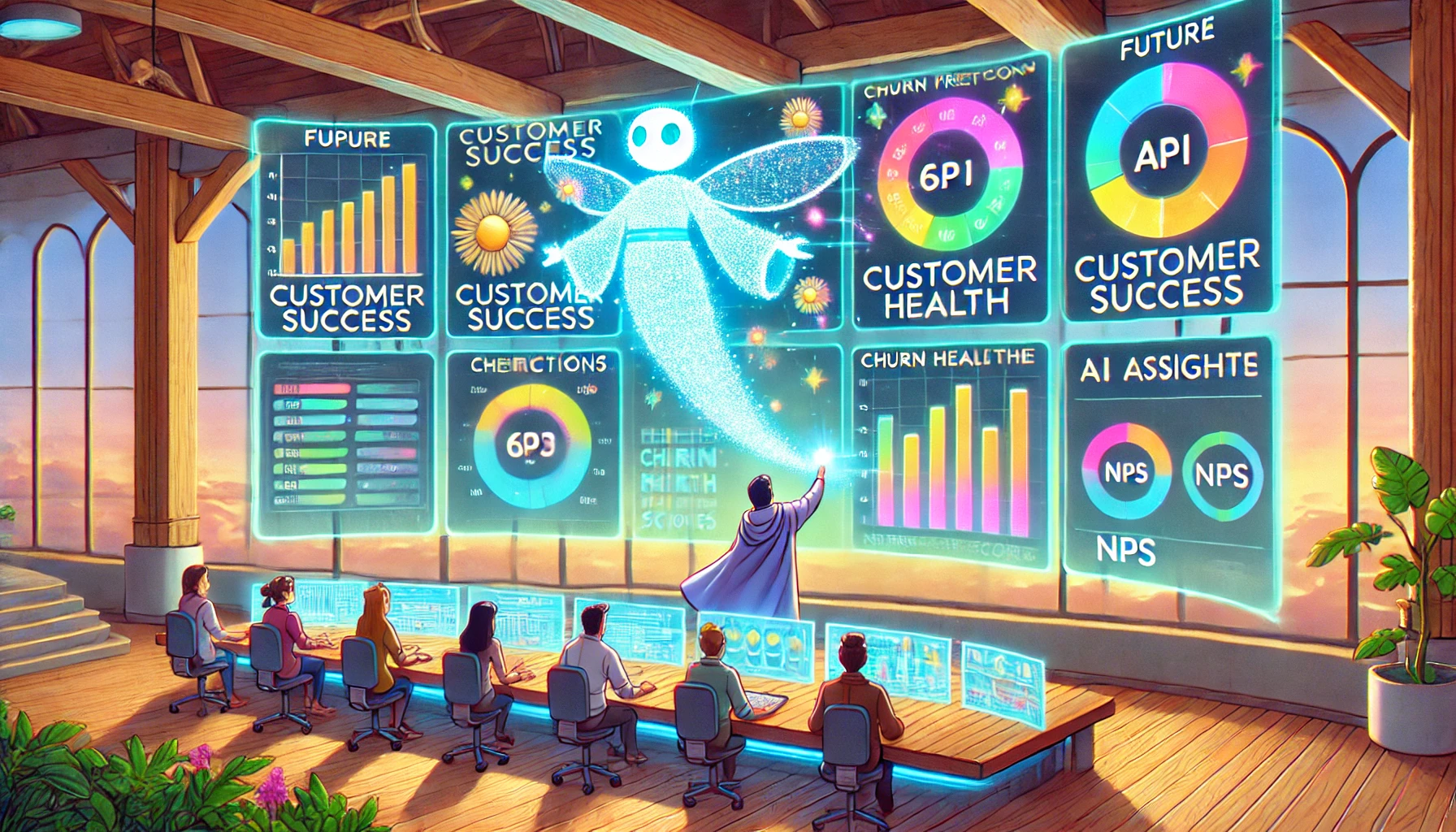
In customer success, measuring performance used to mean tracking churn and CSAT. But that’s no longer enough 🔍
With more data, higher expectations, and tighter margins, success teams need to evolve — fast. Enter AI-powered success metrics.
This isn’t just better reporting. AI transforms how teams understand, predict, and influence customer outcomes — and it’s shaping the next generation of KPIs.
The Evolution of Customer Success Metrics
Traditionally, CS teams have relied on lagging indicators:
- Churn Rate: Too late — they’ve already left.
- Customer Satisfaction (CSAT): Only reflects one point in time.
- Net Promoter Score (NPS): Subjective and often unstructured.
While still valuable, these metrics lack real-time insight and fail to highlight underlying trends. AI helps shift the focus to leading indicators — the signals of future success or risk 🚦
Where AI Takes Metrics Next
AI turns your metrics from passive data points into dynamic, predictive systems. Here’s how:
1. Predictive Modelling
AI forecasts outcomes based on product usage, support history, onboarding progress, and more.
🔗 Salesforce Einstein: Predictive insights in CS
2. Customer Health Scoring 2.0
No more static scoring formulas — AI adjusts in real time based on individual customer context and behaviour.
🔗 Gainsight on evolving health scores
3. Sentiment and Intent Detection
From support tickets to reviews, AI deciphers tone and urgency — even when customers don’t say it outright.
🔗 IBM: NLP in action for customer understanding
4. Revenue Intelligence
AI correlates usage, satisfaction, and engagement with upsell potential — helping CS teams support growth, not just retention.
🔗 Forrester: Revenue intelligence reshaping customer teams
4 Key Areas Where AI Will Dominate
🧠 Proactive Retention
Rather than react to red flags, AI spots churn predictors months in advance and recommends plays to re-engage customers.
📊 Dynamic Goal-Tracking
AI lets success teams set smart, adaptive KPIs based on customer segment, industry, or lifecycle stage.
💬 Conversational Metrics
Every chat, call, or email becomes a data point. AI captures sentiment trends and flags risky language — in real time.
🚀 Strategic Growth Forecasting
AI blends customer data with business intelligence to forecast revenue growth, not just customer survival.
Forward-Looking Tools and Trends
AI-driven customer success isn’t science fiction — it’s already here, and growing fast. Here are a few tools and trends to watch:
- Gainsight Horizon AI: Predictive health scoring + recommended actions
- Totango Spark: Real-time success signals and milestone tracking
- Planhat: AI-powered segmentation and success forecasting
- Snowflake + Looker: Combining data warehousing and AI for advanced CS analytics
And the rise of no-code AI means even small CS teams can harness predictive analytics without needing a data science degree 🎓
Conclusion + How to Prepare
The future of customer success belongs to teams that can act before things go wrong — and AI is how they’ll do it ⚡
If you’re still relying on spreadsheets and monthly reports, you’re already behind. It’s time to start building a success strategy around what’s next, not just what’s now.
Next Steps:
- Audit your current metrics — which are lagging vs predictive?
- Talk to your CS platform provider about AI capabilities
- Run a pilot with health scoring or sentiment tracking
- Keep learning — AI evolves fast, and so should your metrics
The future of success metrics isn’t about measuring — it’s about momentum. And AI is the fuel.